Demand Side Management: A Smart Solution for Sustainable Energy Future
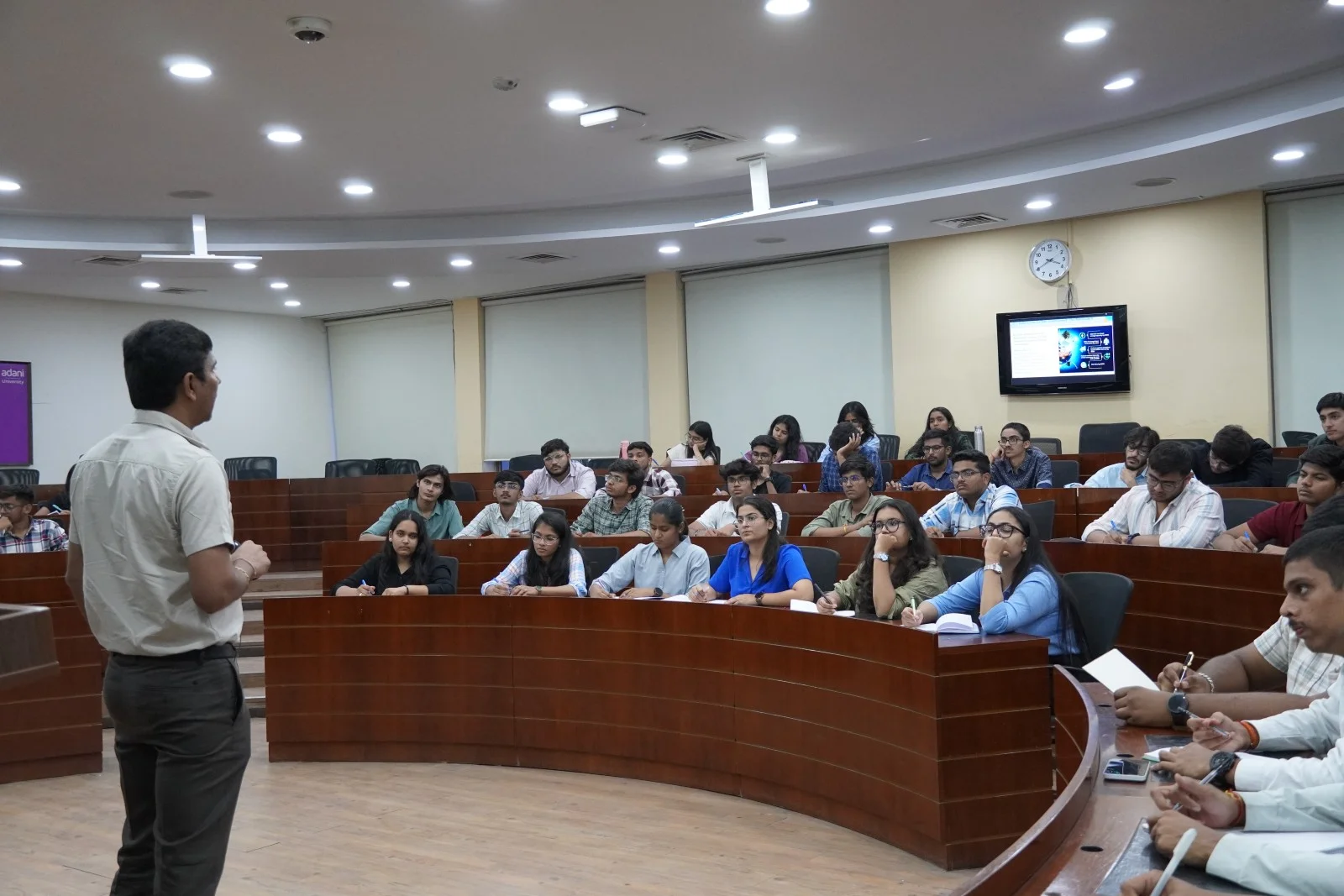
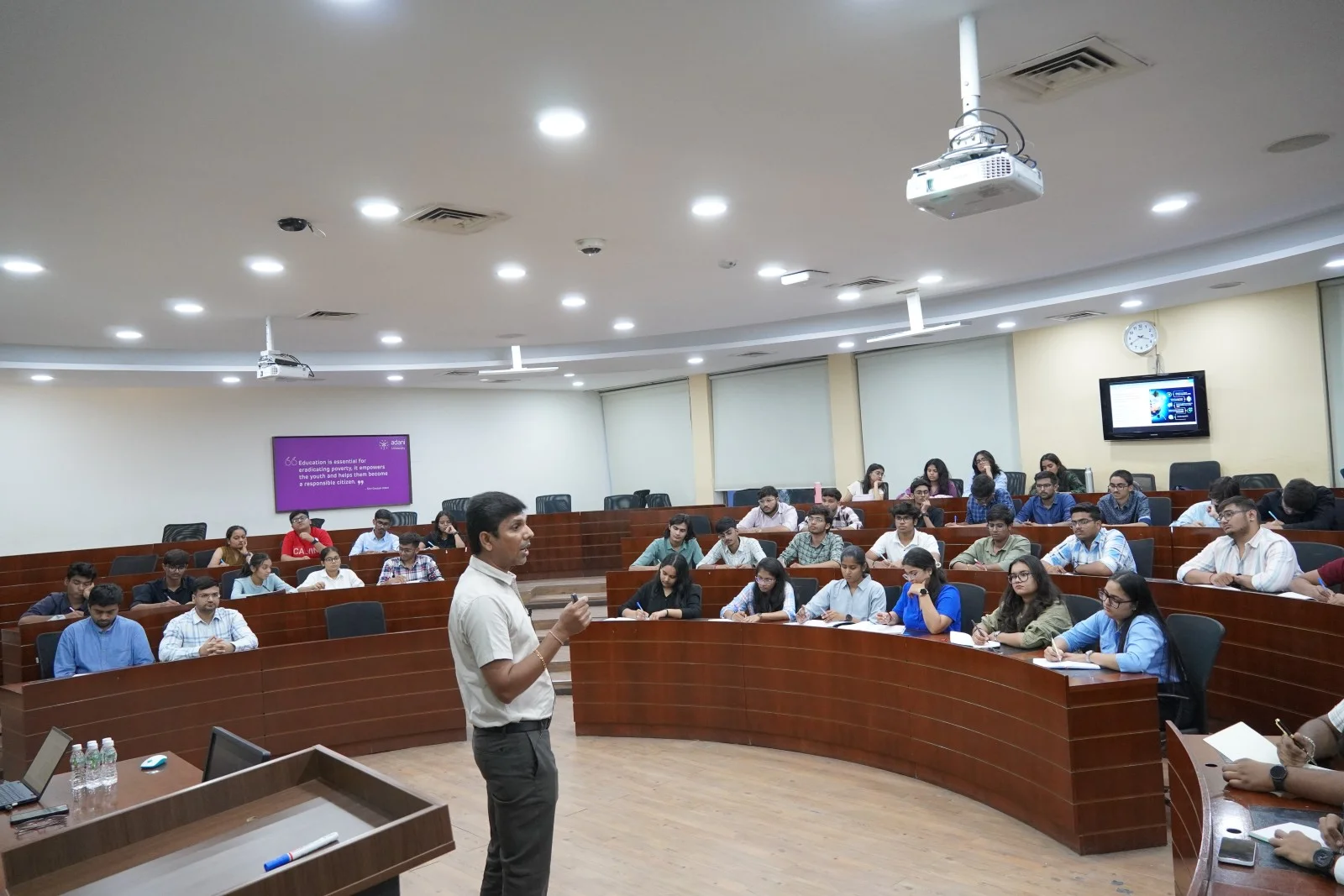
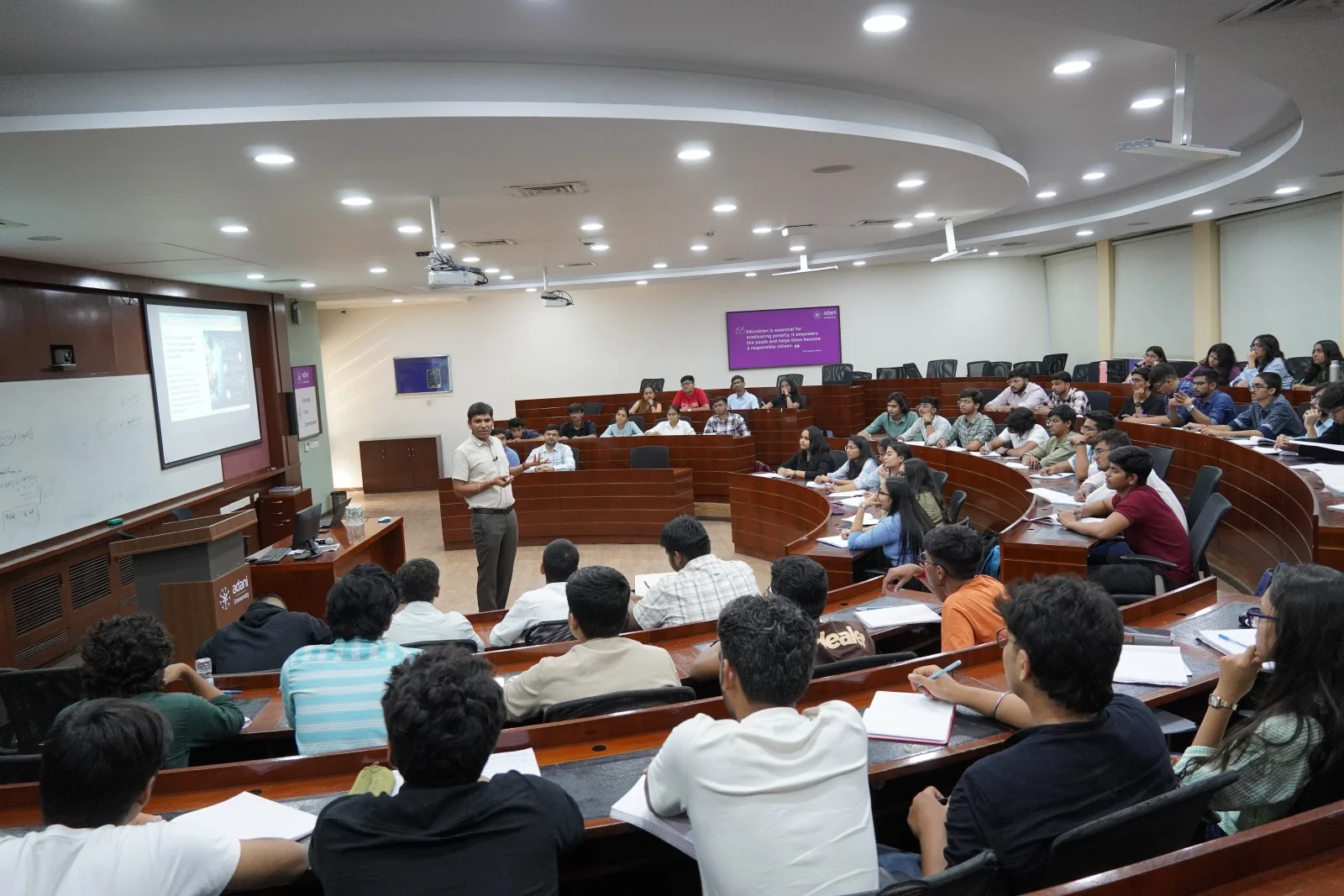
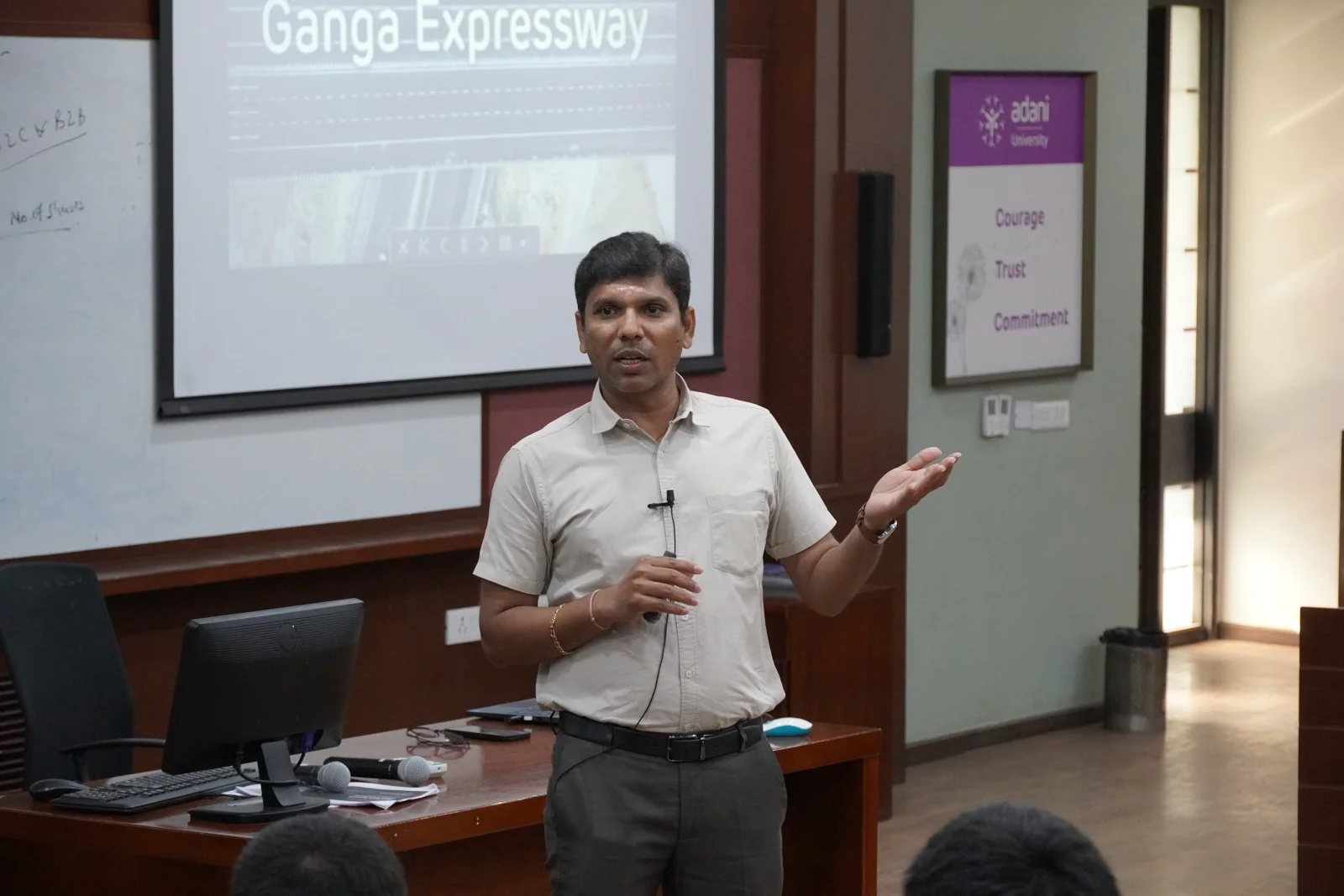
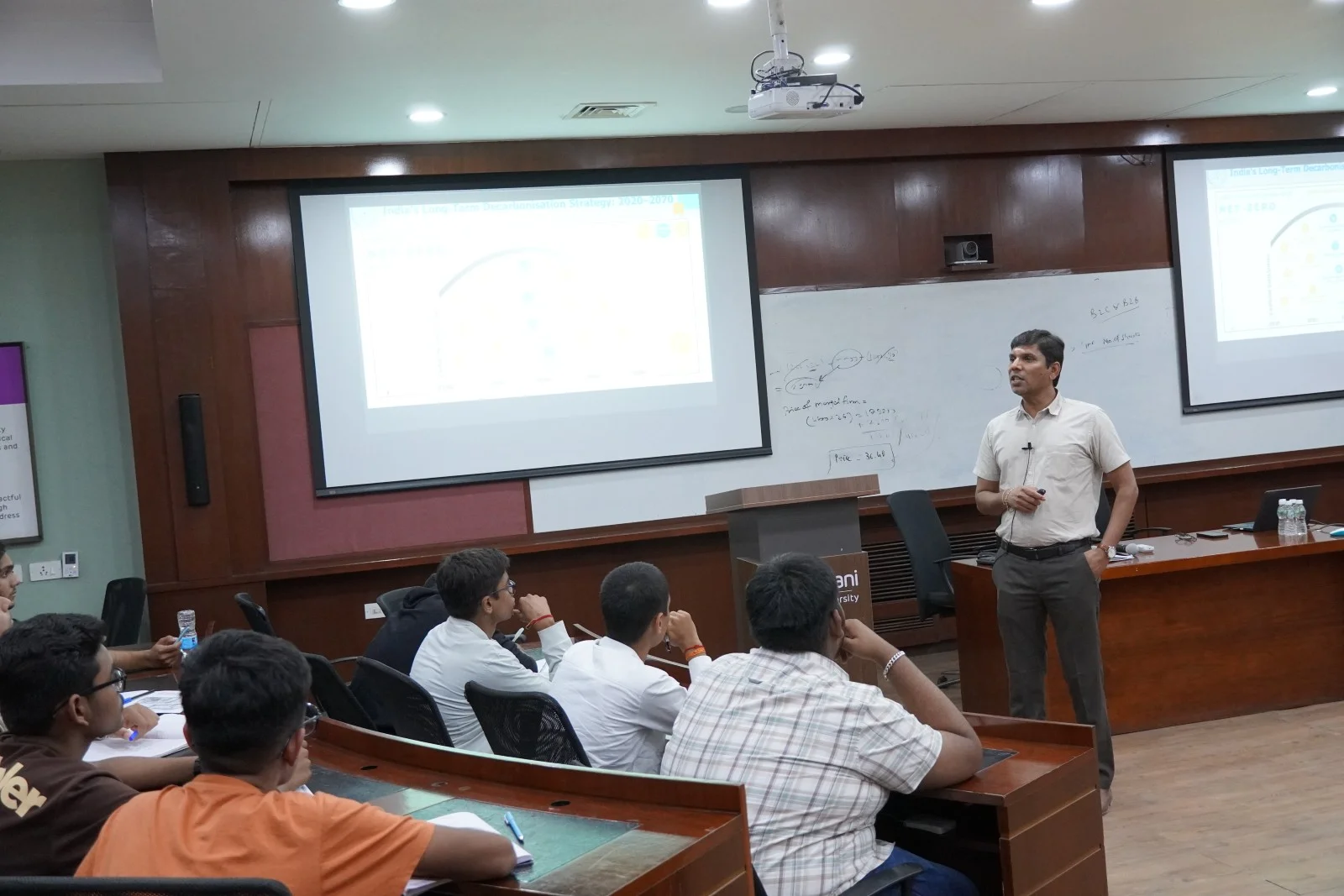
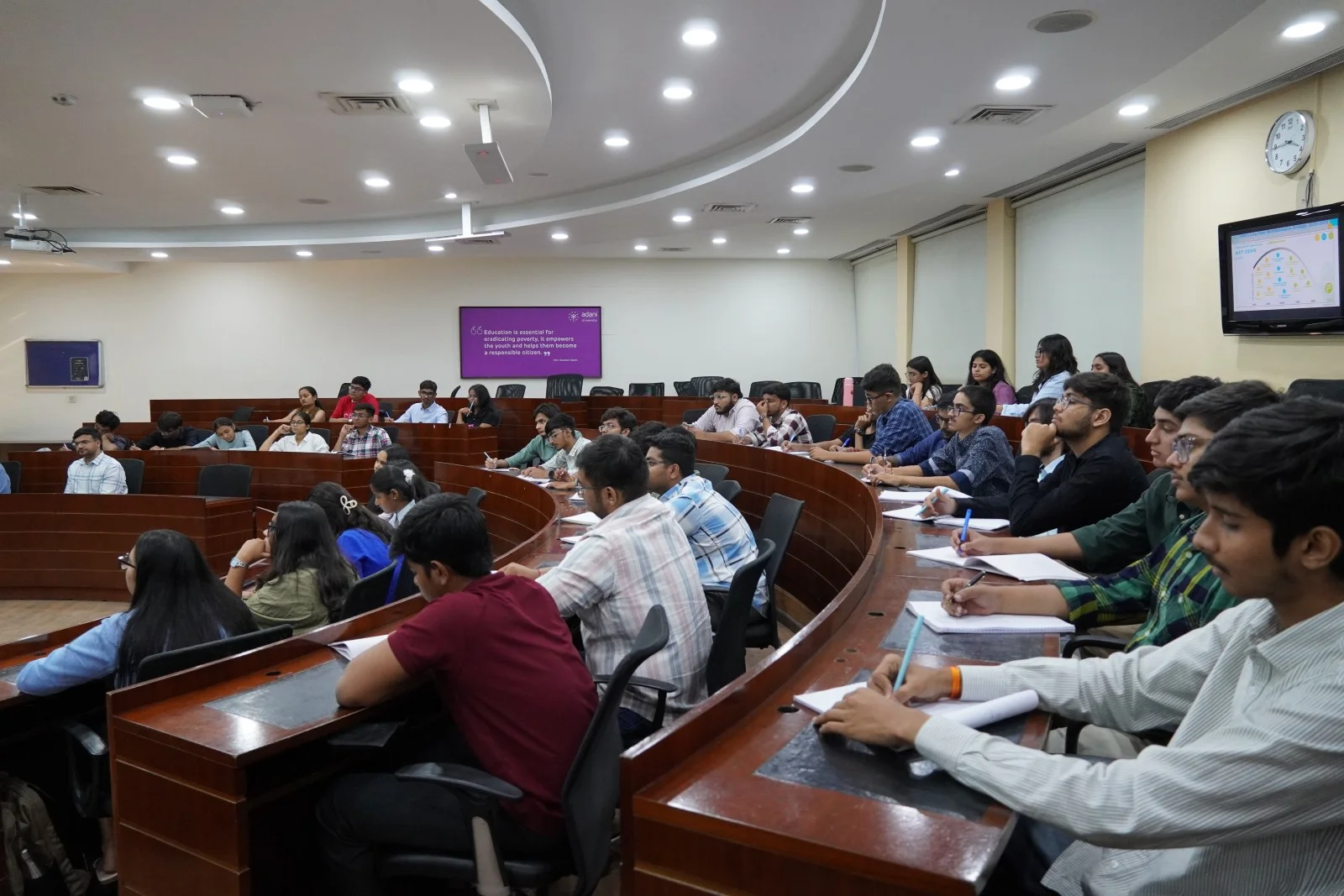
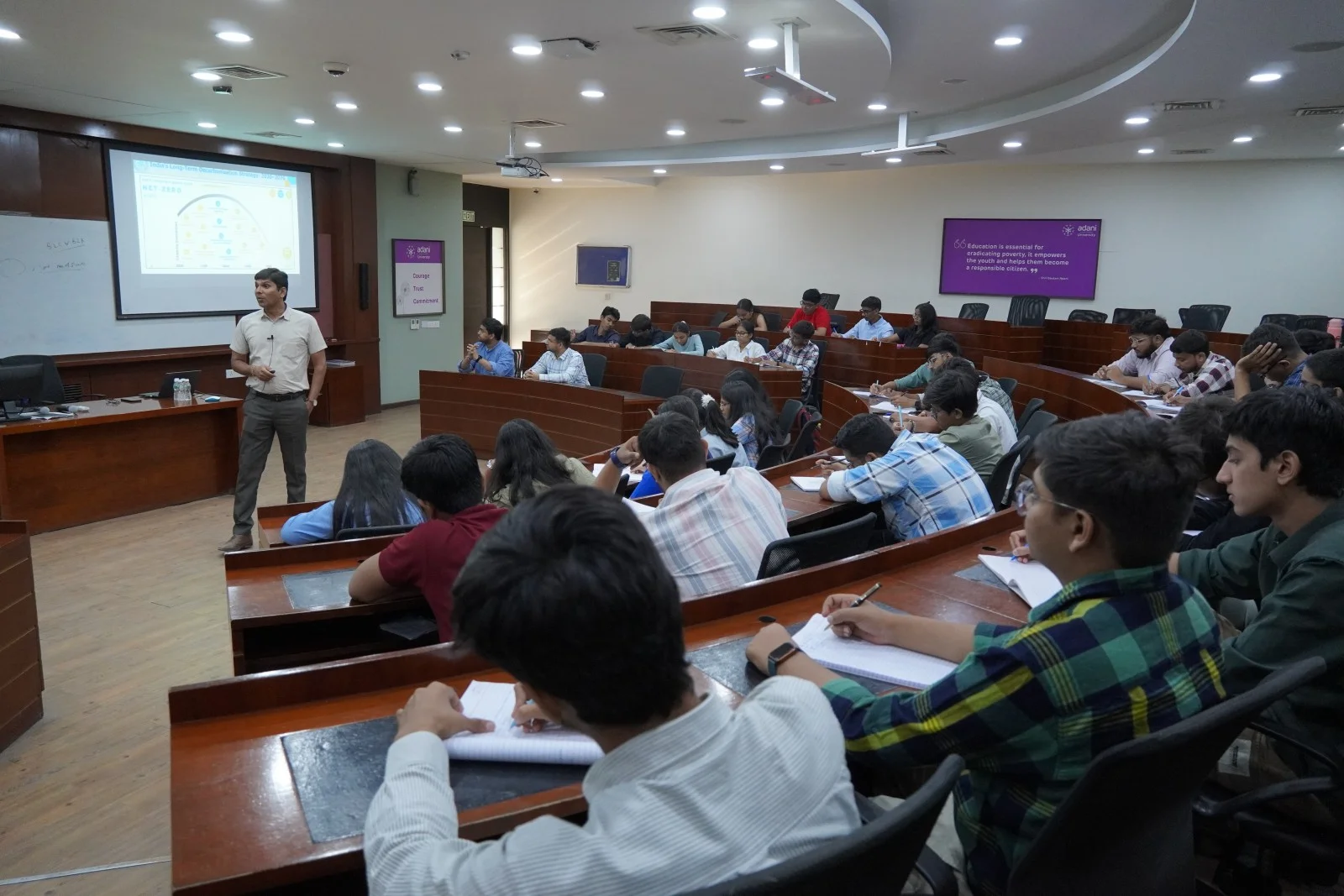
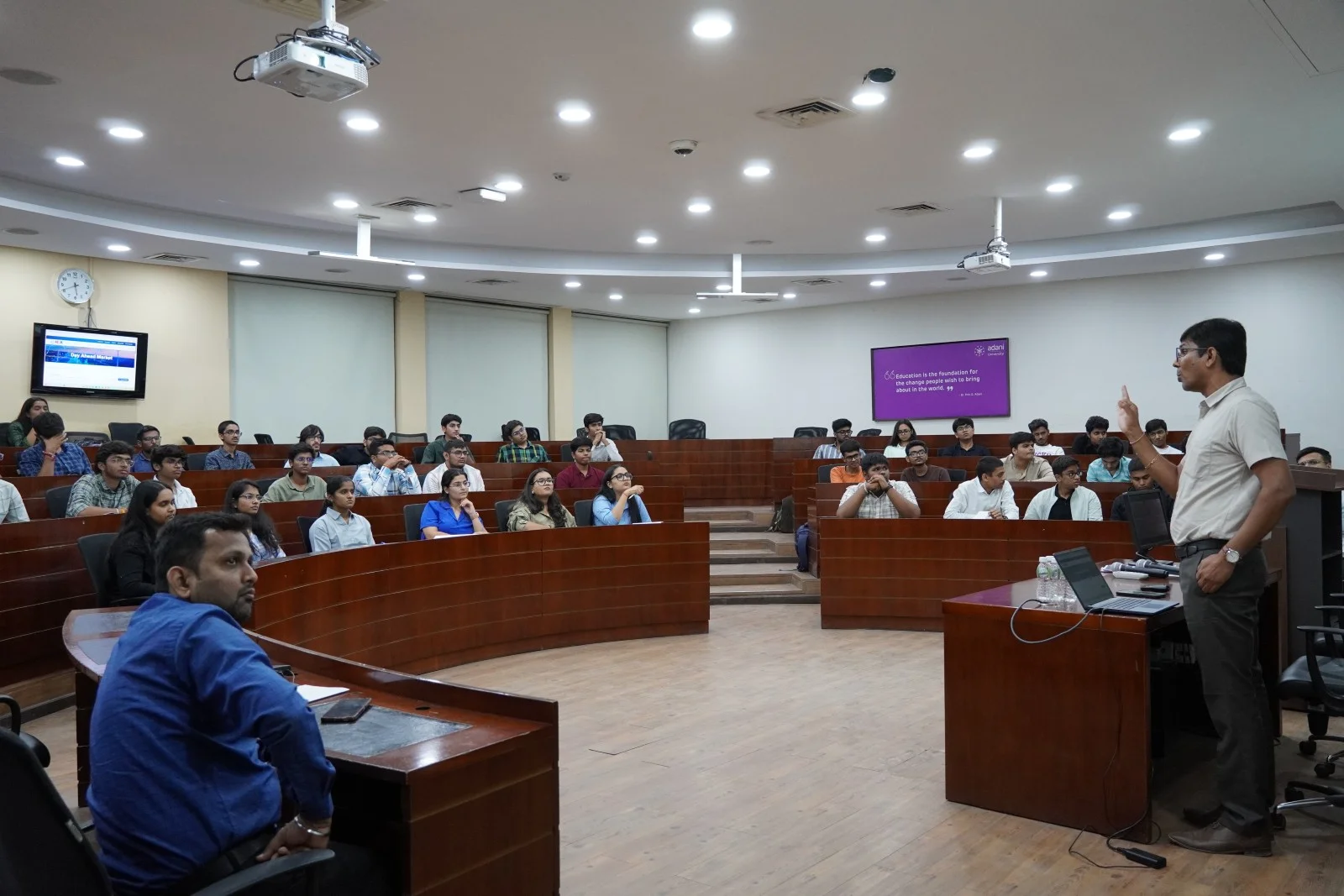
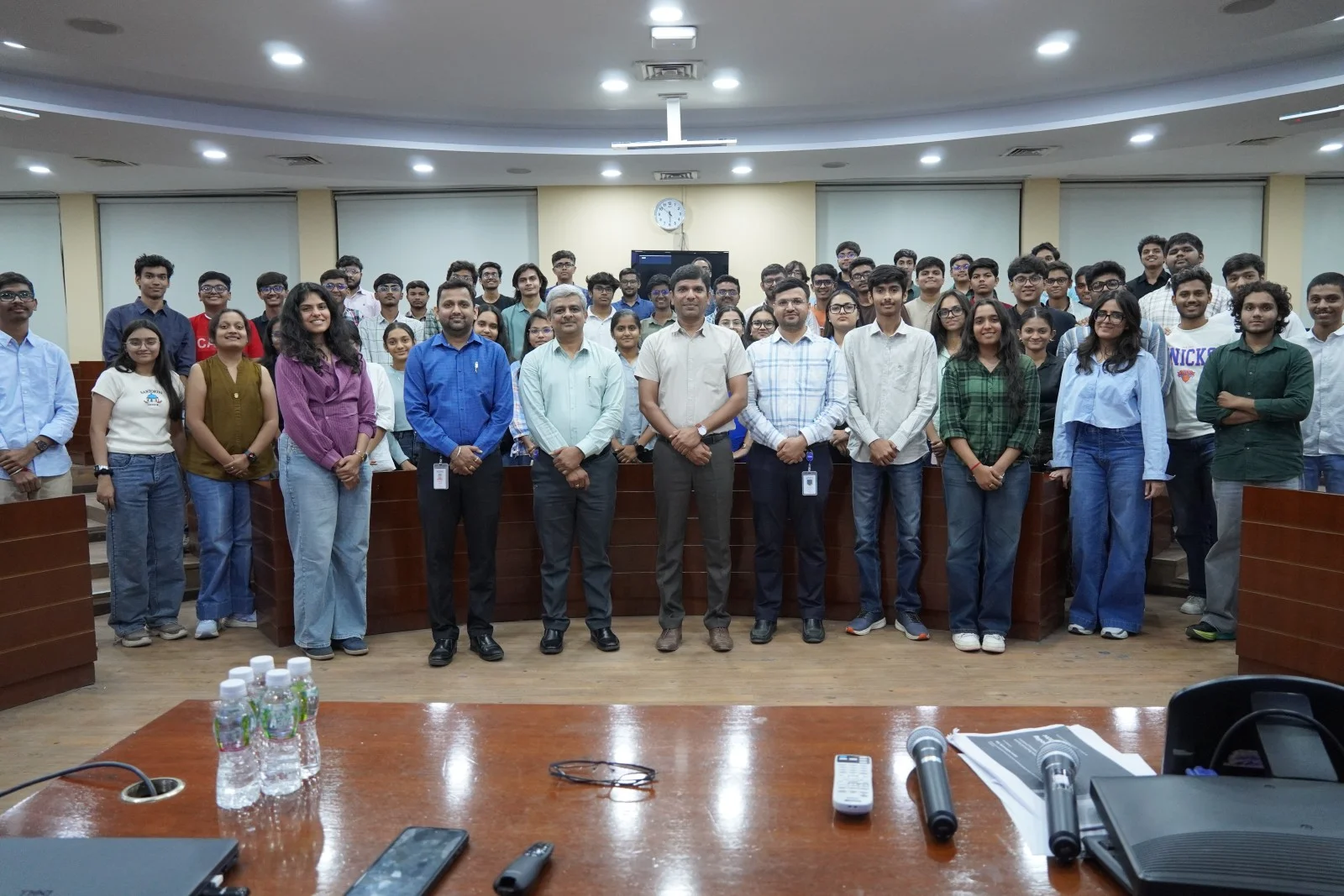
As part of its ongoing mission to blend core foundational sciences with cutting-edge national priorities, the Faculty of Engineering Sciences and Technology (FEST), Adani University, successfully organized the second lecture of its distinguished expert lecture series under the first-year Environmental Science course. Organized and coordinated by faculty members Dr. Rajesh Chouhan, Dr. Ankur Kapoor, and Dr. Partho Mukherjee, the technical session, titled “Demand Side Management: A Smart Solution for Sustainable Energy Future,” was delivered by eminent academician and power systems expert Prof. Naran M. Pindoriya from IIT Gandhinagar, drawing enthusiastic participation from aspiring first-year engineering students.
Prof. Pindoriya opened the session by outlining India’s rapidly expanding energy landscape, emphasizing the urgent need to transition from passive consumption models toward intelligent, demand-responsive grid ecosystems. He introduced students to the engineering principles underlying net-zero energy building designs, illustrating how modern smart sensors, load-shifting strategies, and high-performance building envelopes mitigate peak thermal and electrical stresses.
Transitioning to national-scale infrastructure, the speaker highlighted mega-scale government ventures, including dedicated Green Energy Corridors and large-scale greenfield renewable energy parks designed to seamlessly evacuate solar and wind power. He demystified power market economics by exploring the operational architecture of the Indian Energy Exchange (IEX), peak-hour energy trading, and dynamic energy arbitration mechanisms that ensure grid stability and cost-efficiency during fluctuating supply periods.
Emphasizing India’s strategic roadmap toward self-reliance and comprehensive energy independence, Prof. Pindoriya elaborated on key governmental policies, decentralized rooftop solar incentives, and performance-linked grid modernization schemes. He underscored that achieving a resilient energy future requires interdisciplinary engineers capable of synergizing environmental stewardship with smart metering, battery storage innovations, and advanced analytics.
Student Engagement & Pedagogical Impact
The session culminated in an engaging, open-floor Q&A where first-year engineers posed probing inquiries regarding smart grid vulnerabilities, battery storage economics, and career prospects in renewable grid management. By linking abstract textbook concepts of energy conservation directly to nationwide energy infrastructure, the lecture provided the cohort with invaluable practical perspective and motivated proactive involvement in sustainable engineering research.