Infrastructure Management | Infrastructure Management – Adani University

MBA in Infrastructure Management

Introduction

MBA (Infrastructure Management) is a two-year, four-semester full-time program for those passionate about pursuing a career in Infrastructure. The electives have been designed through our continuous evaluation methodology from our parent group, alumni, and industry connections. This program has been designed to develop managerial, analytical, and leadership capabilities for infrastructure and allied sectors. In addition to some core courses, students round off their degree with multiple specialized electives, such as Transport, Energy & Real Estate & Urban Infrastructure.

In the first year, students complete a core curriculum that provides a thorough, integrated grounding in management & infrastructure essentials. At the same time, they get exposure to a healthy dose of site visits, independent projects, and finally, end with a summer internship. Students round off their degrees in the second year with umpteen elective courses.

Program Overview

Duration: 2 Years, Structure: Four Semesters, Total Credits: 92

Components:

  • Foundation and Preparatory Modules
  • Core Courses
  • Sectoral Electives
  • Functional Electives
  • Summer Internship Project
  • Capstone Project
  • Experiential Learning Components

Sector Overview

  • Infrastructure Developers
  • EPC Companies
  • Consulting Companies
  • Realty Sector
  • Transport & Logistics
  • Oil & Gas, Power & Renewables
  • Private Equity
  • Asset Management

Program Pedagogy

  • Program steered by distinguished faculty and acclaimed industry practitioners through lectures, presentations, and contemporary simulations, assignments, and group projects.
  • The curriculum has been prepared based on NEP-2020 guidelines.
  • Each course is embedded with Indian Knowledge System (IKS) and AI components.
  • Experiential learning, case-based and application-oriented practical implementation of the theories and concepts.
  • Extensive industry-interface through conferences, workshops, symposiums, panel discussions, club activities, guest speakers, seminars, live projects, and site visits.

Program Curriculum

Foundation and Preparatory Modules:

Prior to the commencement of the regular semesters, students undergo preparatory modules aimed at strengthening communication, analytical, and managerial skills. These include:
  • Microsoft for Managers
  • Communication Skills
  • Finance Fundamentals
  • Fundamentals of Statistics
  • Excel for Managers
  • AI Applications for Managers
  • Case Study Cracking

Semester-I and II: Core Management Foundations

The first year (Semester-I and Semester-II) focuses on building foundational competencies in management and infrastructure studies through courses such as:

SNSemester – I
1Managerial Economics
2Statistics for Managers
3Managerial Communication -1
4Marketing Management
5Financial Reporting & Accounting
6Organisational Behaviour
7Infrastructure Business Environment
8Indian Knowledge System- MOOC
9Health and Wellness
10Design thinking
11Infrastructure Law and Regulations
12Operations Management
SN Semester – II
1 Sales and Distribution Management
2 Business Analytics
3 Corporate Finance
4 Contract Management
5 Project Management
6 Supply Chain and Logistics Management
7 Business Research Methods
8 Carbon Neutral Enterprise and ESG
9 Public Private Partnership
10 Foreign Language
11 Human Resource Management
12 Managerial Communication -2
13 Strategic Management
14 Quantitative Analysis
15 Indian Architecture and Town Planning- MOOC
16 Summer Internship Project

Semester-III and IV: Advanced and Elective Courses:

The second year emphasizes sector-specific expertise and functional specialization through a combination of advanced core and elective courses.

SN Semester – III
Core Courses
1 Project Appraisal and Risk Analysis
2 Professional Ethics, Sustainability and Social Responsiveness
3 Entrepreneurial mindset and innovation
Sectoral Electives (4 Courses Compulsory)
a Urban and Real Estate Management
1 Real Estate Policy and Economics
2 Urban Infrastructure Management
3 Real Estate Finance & Valuation
4 Construction Management
b Transport Management
1 Transport – Policy, Economics & Management
2 Managing Airport Business
3 Shipping Management
4 International Trade Practices
c Energy Management
1 Energy Economics and policy
2 Fossil Fuels
3 Global Carbon Finance
4 Renewable Energy
Functional Electives (4 Courses compulsory)
a Business Development
1 Marketing Research and Information Systems
2 New Business Development
3 Services Marketing
4 Marketing Analytics
b Digitalisation and Analytics
1 Disruptive Technologies & Digital Transformation
2 Customer-Centricity in the Digital Age
3 Deep Tech and Digital Business
4 Innovation and Change Management
c Operations and Supply Chain
1 Warehouse Management
2 Supply Chain Analytics
3 Procurement Management
4 Operations Strategy
d Finance
1 Financial Control and Performance
2 Infrastructure Finance
3 Financial Analytics
4 M&A and Corporate Restructuring
SN Semester – IV
Core Courses
1 Business Consulting and Client Management
2 Application of AI in Infrastructure Sector
Sectoral Electives (2 Courses Compulsory)
a Urban and Real Estate Management
1 Urban Development Planning and Governance
2 Real Estate Business Development
b Transport Management
1 Rail and Road Transportation
2 Cargo and Multi-Modal Logistics Management
c Energy Management
1 Emerging Technology in Energy
2 Energy Management
d Aviation Management(*proposed to bring here Managing Airport Business)
1 Passenger handling and customer services
2 Legal and regulatory framework for aviation business

Capstone Project

Career Prospects

  • Government & PSUs
  • Consulting Companies (Project Management/ Utility & Regulatory)
  • Infrastructure Developers / Construction Companies
  • EPC Contractors
  • Asset & Fund Management Companies
  • Investment & Merchant Bankers
  • Private Equity (PE) Investors
  • Financial Institutions & Banks
  • Engineering Companies
  • Project Executing & Management Agencies
  • Logistics & Supply Chain Companies
  • Academic Research Bodies
Alumni
1 +
Highest Package
LPA
Recruiters
1 +
Students Placed
0 %

Admission Eligibility

  • Candidates must have a valid national-level entrance test score (CAT / XAT / CMAT / GMAT / NMAT / MAT / ATMA / SNAP). Candidates may complete and submit their application without a test score, too. However, they will be required to submit the test score as and when the test results are out.
  • Candidates must hold a bachelor’s degree with minimum of 50% marks (45% for reserved category candidates) or equivalent qualification CGPA from any recognized university in India and abroad.
  • Candidates in their final year of graduation are also eligible to apply.
  • Candidates with work experience: Though prior work experience (paid and full-time employment after completion of graduation) is not mandatory for a candidate seeking admission to MBA programs, candidates with relevant work experience may have an upper edge in the selection process.

Selection Process

  • We seek bright, capable, motivated students who are ready to take advantage of the abundant opportunities we have to offer. As a highly selective institution, we strive to develop a complete picture of all applicants and what they may bring to our campus. While an applicant’s academic performance is the factor considered most heavily in the admission process, we also take into consideration their test scores, work experience (if any) and extra-curricular activities.
  • The final selection will be based on the following criteria:
    • Valid entrance test-score
    • GD-PI
    • Academic Performance
    • Relevant Work Experience
    • Extra-curricular Activities
GD-PI Round
Admission Offer

Provisional Key Dates

Sr. No. Particular Important Dates
1 Application Forms published on https://www.adaniuni.ac.in/apply-fms December 01, 2025
2 Last Date of Receiving applications with required documents *January 31, 2026 (Round # 1)
3 GD-PI rounds for Shortlisted Applicants January – 2026 onwards
4 Release of ‘Offer of Provisional Admission’ to Selected Candidates January – 2026 onwards
5 Last Date for Payment of Fees to Secure Admission As per ‘Offer of Provisional Admission’
6 Operating of Waitlist To be announced
7 Commencement of Program (Tentative) First week of July
*Recurring rounds are subject to availability of seats after R#1
Notes : Any changes / updates to the above-mentioned dates will solely be the discretion of Admission Committee at AU-FMS. Calendar for MBA-2026 from Admission Committee for Professional Courses (ACPC), Govt of Gujarat will be accommodated as and when announced. Applicants are advised to check University website or/and keep in touch with Admissions Office regularly.

Fees Structure

(Amt. in INR)
Sr. No. First Year Term 1 Term 2 Term 3 Remarks
1 University Enrolment Charge (One-time) 10000 0 0 Mandatory
2 Tuition Fee * 73670 73670 73660
3 Examination Fees 7500 7500 7500
4 Career Development Assistance Charges (One-time) 0 0 30000 Optional
Total 91170 81170 111160
Sr. No. Second Year Term 4 Term 5 Term 6 Remarks
1 Tuition Fee* 73670 73670 73660 Mandatory
2 Examination Fee 7500 7500 7500
Total 81170 81170 81160
2nd year fees 243500
TOTAL FEES 527000

Quick Links :

More Courses :

01
First Year

Core Courses

Timester : 1, 2, 3

Fundamental Management

Functional Courses

2 Months
Summer Internship
02
Second Year

Core & Elective Courses

Timester : 4, 5

Timester : 6

Timester : 4, 5

Sectoral Electives
  • Urban & real estate
  • Transport
  • Energy
Functional Electives
  • Finance
  • Policy
  • Corporate Practises

Timester : 6

Infra Laboratory

Apprenticeship Training

Foundation Course

  • Finance Fundamentals
  • Fundamentals of Statistics
  • Excel for Managers
  • Communication Basics
  • Case Study

Core Courses

Trimester 1

  • Infrastructure Business Environment
  • Managerial Economics
  • Managerial Communication – I
  • Data Science for Managerial Decisions
  • Financial Reporting & Accounting
  • Organisational Behaviour
  • Marketing Management

Trimester 2

  • Sales and Distribution Management
  • Business Analytics
  • Managerial Communication-II
  • Quantitative Analysis
  • Corporate Finance
  • Infrastructure Law and Regulations
  • Project Management
  • Workshop – I

Trimester 3

  • Operations Management
  • Strategic Management
  • Contract Management
  • Supply Chain and Logistics Management
  • Business Research Methods
  • Public Private Partnership
  • Carbon Neutral Enterprise and ESG
  • Workshop -II

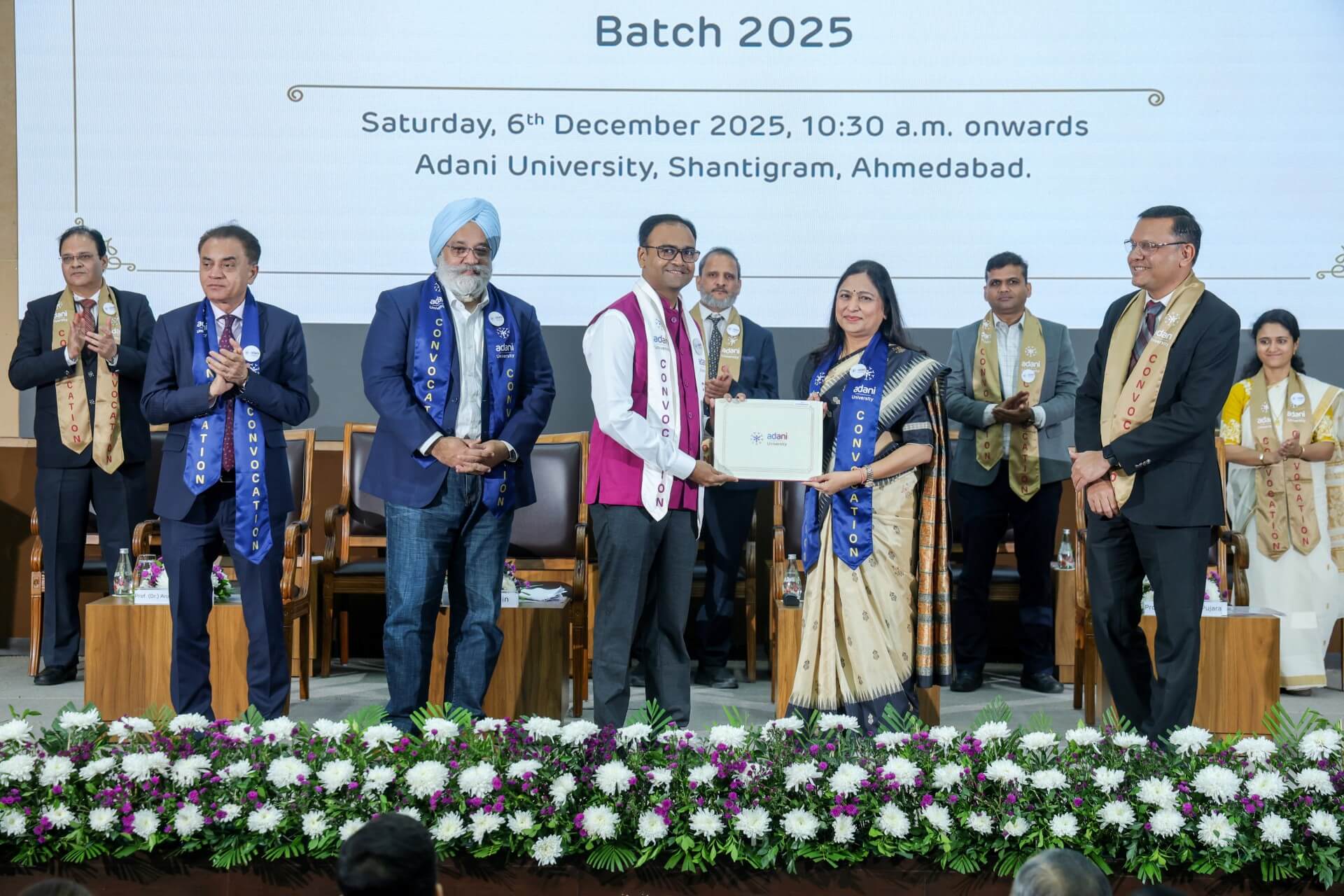
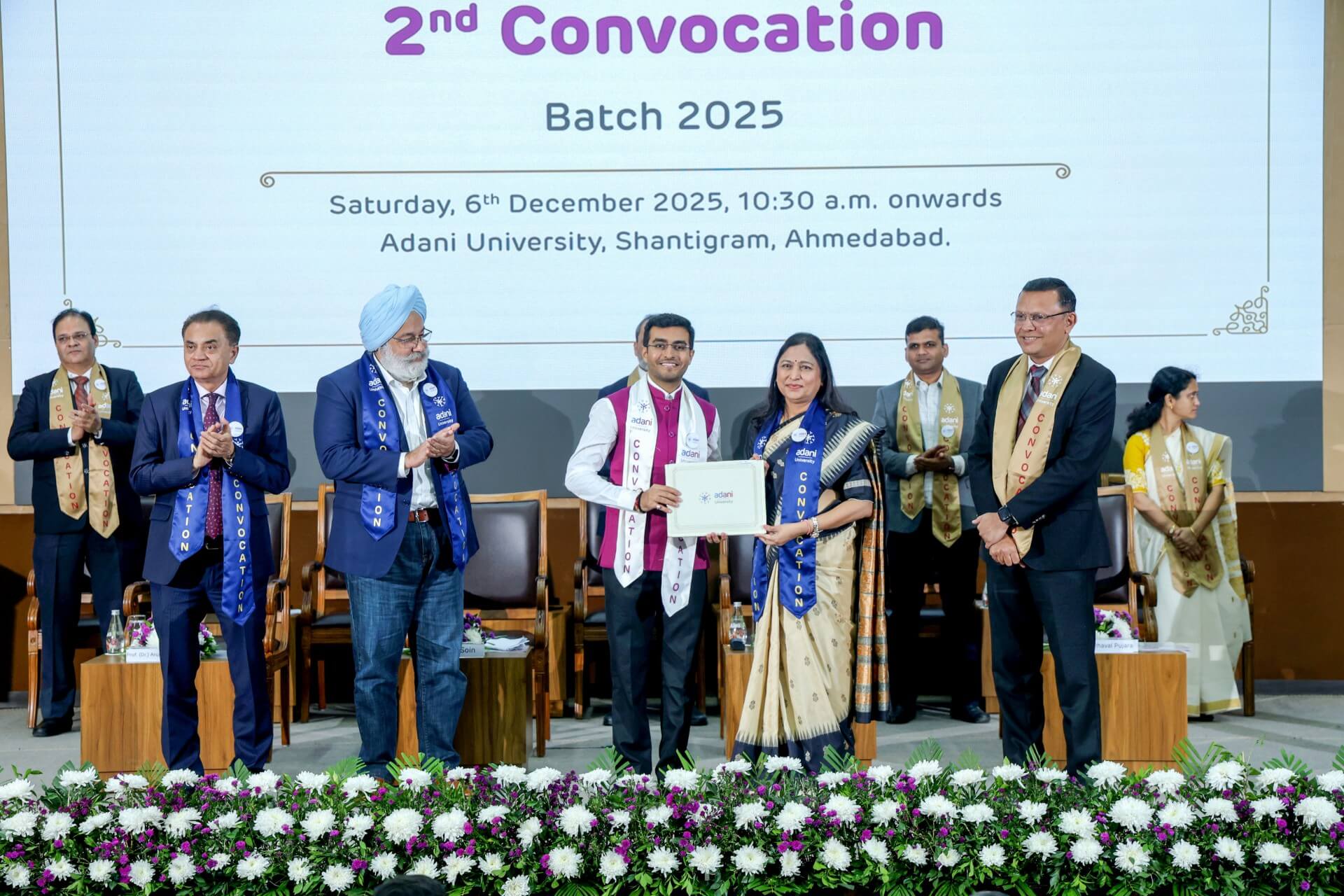
Convocation 2025

Medalist Awarded

Bhalodia Kaushik Arjanbhai

Gold Medal

Jaiom Joshi

Silver Medal

Student to Professional

Learn more about the MBA (Infrastructure Management) program

Part-1
Part-2
Part-3