Theme
Integrating Technology and Sustainability: Pathways to a Clean Energy Future
- Home
- ICIDS 2026
In Partnership with
Gold Partner
Publishing Partner


Scopus Indexed
About the Conference
The 4th International Conference on Infrastructure Development and Sustainability (ICIDS 2026) is a premier global platform that brings together thought leaders from academia, industry, government, and policy institutions to deliberate on the future of sustainable infrastructure and clean energy systems.
Centered around the theme “Integrating Technology and Sustainability: Pathways to a Clean Energy Future,” the conference aims to address the pressing challenges of climate change, rising energy demand, and the urgent need to transition from fossil‑based systems to cleaner, greener alternatives. As nations strive toward energy security and sustainability, ICIDS 2026 seeks to explore how emerging technologies, innovative business models, and progressive policy frameworks can collectively accelerate this transition.
The conference will facilitate rich dialogue on critical areas such as renewable energy integration, resilient infrastructure development, decarbonization of hard‑to‑abate sectors, smart and connected cities, AI‑driven infrastructure management, and circular energy economies. By fostering interdisciplinary collaboration and knowledge exchange, ICIDS 2026 aspires to generate actionable insights and scalable solutions for building future‑ready, sustainable ecosystems.
Panel Discussion
Discussion 1: Green Capital and Governance
Discussion 2: Decarbonizing the Cement Industry
Plenary Session
Session 1: Blueprints for Tomorrow
Session 2: Digital Pulse of Infrastructure
Fireside chat
Reimagining the Energy Industry
Patrons


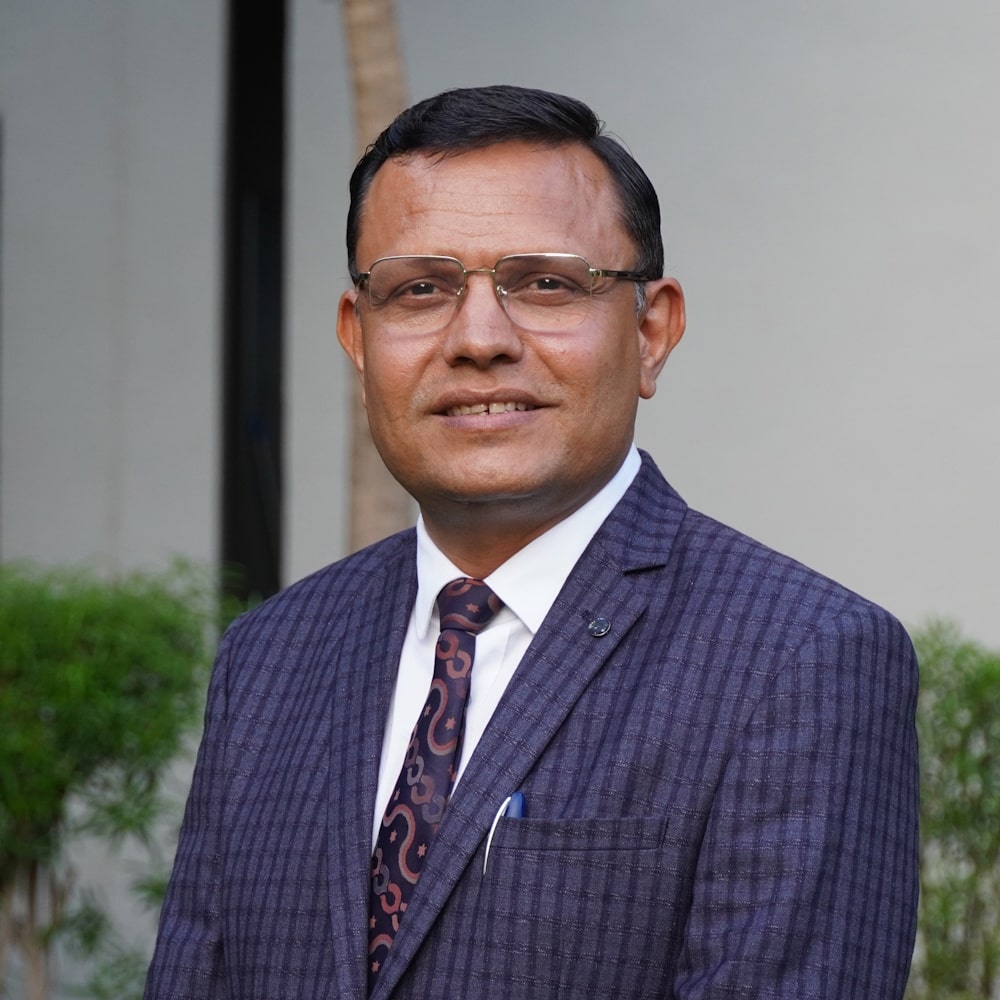
Global Advisory Committee
Dr. Vibha Dhawan
Director General of The Energy and Resources Institute (TERI)
Prof. Laxmidhar Behera
Director, Indian Institute of Technology Mandi
Dr. Deepa Sethi
Dr. A. Sheshadri Shekhar
Director IIT Palakkad, Kerala
Prof. Ganesan Raghuram
Professor Emeritus Gujarat Maritime University
Dr. Krishna Kumar
Dr. Ashutosh Mruduli
Technical Tracks
Track Focus: Strategic, regulatory, and organizational challenges in transitioning electricity grids toward renewable, resilient, and digitally enabled systems.
Sub-Tracks / Topics
- Strategic planning and governance of grid modernization
- Managing uncertainty, risk, and resilience in power systems
- Business models for renewable-integrated grids
- Regulatory frameworks and market reforms for future grids
- Digital transformation strategies in utility organizations
- Stakeholder coordination in decentralized grid ecosystems
- Investment decision-making in grid infrastructure
Track Focus: Management of sustainable construction projects through innovation, collaboration, and lifecycle-oriented decision-making.
Sub-Tracks / Topics
- Strategic project management for sustainable infrastructure
- Adoption and diffusion of smart and green construction materials
- Managing sustainability across the construction value chain
- Cost–benefit and lifecycle analysis in green construction
- Digital project governance and coordination mechanisms
- Risk management in sustainable construction projects
- Contractor–developer–government collaboration models
Track Focus: Urban governance, policy design, and strategic management of sustainable mobility and energy systems in cities.
Sub-Tracks / Topics
- Urban mobility governance and policy innovation
- Strategic planning for clean and inclusive transport systems
- Business models for shared and electric mobility
- Public–private partnerships in urban infrastructure
- Managing data-driven decision-making in smart cities
- Equity, accessibility, and social inclusion in urban mobility
- Citizen engagement and behavioral change in city systems
- The role of solar, wind, hydro, green hydrogen, and geothermal energy in progressing towards net-zero.
- Mitigating climate change through clean energy deployment
- The intersection of smart grids, energy storage, and decentralized energy systems.
Track Focus: Organizational, operational, and strategic implications of AI-driven infrastructure management.
Sub-Tracks / Topics
- Data-driven asset management strategies
- Organizational readiness for predictive and autonomous systems
- Operations management using real-time analytics
- Digital capability building in infrastructure organizations
- Governance, ethics, and accountability in AI-enabled assets
- Managing technology–human interfaces in infrastructure
- Performance measurement and decision support systems
Track Focus: Strategic, economic, and policy dimensions of circular energy systems and sustainable industrial ecosystems.
Sub-Tracks / Topics
- Circular economy strategies in energy and infrastructure sectors
- Business models for waste-to-energy systems
- Industrial symbiosis and cross-sector collaboration
- Policy instruments supporting circular energy transitions
- Value chain redesign for resource recovery and reuse
- Financing and scaling circular energy solutions
- Measuring environmental, economic, and social value creation
- Guidelines for Submission
- Original articles with new outcomes within the 10–12 pages/up to 10,000 words.
- All papers will undergo Blind review Process
- Refrain from submitting papers that are significantly similar to a work already published or under review for a conference or journal. – (Click here to refer the publishing ethical guidelines)
- Please submit your full paper on icids@adaniuni.ac.in
Guidelines for full paper submission (PDF attached)
Ethical Guidelines (PDF attached)
- Important Dates
| Full Paper Submission | October 20, 2026 |
| Early Bird Registration | November 15, 2026 |
| Last date of Registration | November 30, 2026 |
Publication note to be added
Select papers from the conference will be published by Springer as a proceedings book volume. Springer will conduct quality checks on the accepted papers and only papers that pass these checks will be published.
We do not publish abstracts, extended abstracts, literature review articles, questionnaires/survey based papers. We only publish full papers, original articles with new outcomes in proceedings (not less than 6 pages).
Springer Nature does not charge any money for publication of Non-Open Access content.
Registration Fees
| Categories | Early Bird | Regular |
|---|---|---|
| International Delegates | 300 USD | 450 USD |
| Academician | 5000 INR | 6000 INR |
| Industry Professional | 7000 INR | 8000 INR |
| Doctoral Scholars/PhD Students | 3000 INR | 4000 INR |
| Students | 2000 INR | |
How to Reach ?
- By Road
- By Rail
- Ahmedabad Junction (ADI) is the main railway station in Ahmedabad, approximately 25 km from the university. Taxis and auto-rickshaws are readily available from here.
- Gandhinagar Railway Station is about 17 km from the campus, providing an alternative for those traveling via Gandhinagar.
- By Air
Sardar Vallabhbhai Patel International Airport (AMD) is located 22 km from the university. It is well-connected to major cities in India and abroad. Upon arrival, you can use taxis, ride-sharing services, or pre-arranged airport transfers to reach Adani University. The drive from the airport takes around 30-40 minutes depending on traffic conditions.
- Reaching the Venue
Upon arrival at Adani University, ICIDS attendees will find signage guiding them to the event locations within the campus. The university is known for its modern infrastructure and well-organized campus layout, making navigation straightforward. The main event hall is just a short walk from the entrance. Volunteers and event staff will be available to assist attendees with directions and transportation within the campus.
- Ahmedabad Weather
During the ICIDS 2026 event, Ahmedabad typically experiences mild winter weather. Daytime temperatures range from 20°C to 28°C (68°F to 82°F), while evenings may be cooler, dipping to around 12°C to 18°C (54°F to 64°F). Though rainfall is unlikely during this period, it’s always a good idea to check the forecast closer to your travel date. The pleasant weather in November makes it ideal for exploring the city after the conference sessions.
- About Ahmedabad
- Conference Chairs
| Dr. Manju Raisinghani, Assistant Professor |
| Dr. Krishna Murthy Inumula, Professor |
- Editorial Team
| Dr. Sandip Solanki, Professor & Dean, FMS | Dr. Rachna Gangwar, Professor |
| Dr. Anindita Chatterjee, Professor | Dr. Shamindra Nath Sanyal, Professor |
| Dr. Baishali Mitra, Associate Professor | Dr. Namita Pragya, Assistant Professor |
| Dr. Riya Mehta, Assistant Professor | Dr. Vidya G Mohan, Assistant Professor |
| Dr. Karan Radia, Assistant Professor | Dr. Sameer Patel, HoD & Assistant Professor |
| Dr. Raj Jadav, Assistant Professor | Dr. Partho Mukherjee, Assistant Professor |
Enquiry for Conference Interest
ICIDS 2026 Venue: Adani University
- Address
Adani University, Shantigram Township, Near Vaishnodevi Circle, SG Highway, Ahmedabad, Gujarat – 382421, India.
Social Chat is free, download and try it now here!